
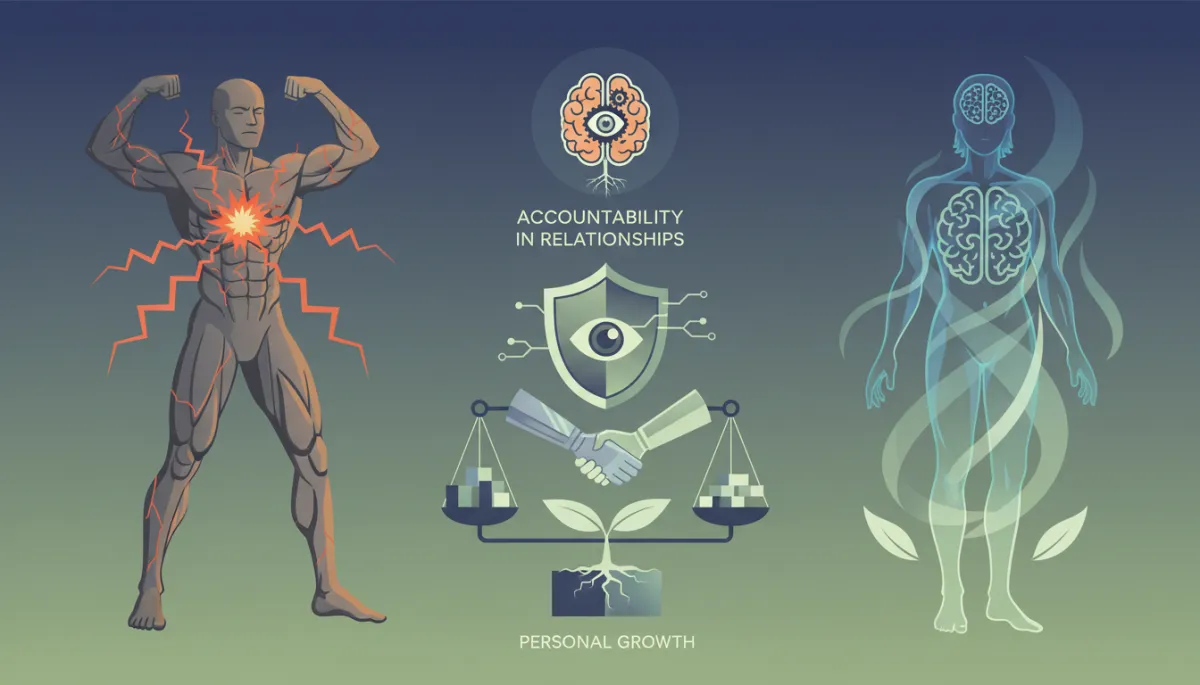
Emotional Maturity vs. Physical Strength
Emotional Maturity, Personal Growth, Relationships
The Illusion of Strength: Why Your Physical Grit Can’t Save Your Relationships
In a world that glorifies hustle and grind, we’ve learned to mistake visible toughness for real resilience. We applaud the body that can endure pain, while quietly ignoring the heart that cannot tolerate discomfort in love, honesty, or accountability. You can have a strong body and still feel fragile in your relationships, powerful in the gym yet powerless in an honest conversation. This confusion creates an illusion of strength—one that prizes visible hardship while neglecting the deeper courage required for Emotional Maturity and healthy, accountable relationships. The cost is high: unspoken resentment, repeated conflict, and connections that never feel fully safe. Learning to tolerate emotional discomfort is not just “inner work”; it is the difference between performing strength and actually living a life built on trust, intimacy, and lasting Personal Growth.
The Physiology of Discomfort: Why Physical Pain Feels “Rewarding”
Physical discomfort is relatively straightforward. When you push through a demanding workout or endure physical strain, your body responds with a cascade of chemicals. Adrenaline heightens focus and energy, endorphins dull pain and create a sense of relief, and dopamine can reward you with a post-effort “high.” This biochemical cocktail turns physical hardship into something that can feel exhilarating, even addictive. The narrative is simple: you suffer, you push, you win. The body rewards the effort, and your sense of Strength Vs. Weakness is reinforced in a very tangible way.
Emotional discomfort, however, operates on a different plane. When you admit you are hurt, insecure, or wrong, there is no adrenaline rush, no chemical reward that instantly makes you feel powerful. Instead, your nervous system may register vulnerability as a threat—your heart rate can rise, your muscles tense, and your instinct may be to defend, withdraw, or attack. Emotional honesty does not come with the same built-in “win” response; it often feels like standing unarmored in front of yourself and others, with nothing to hide behind. That is precisely why it is a more accurate measure of Personal Growth.
Emotional Honesty: Facing Yourself Without the Rush
Because emotional honesty lacks an immediate chemical payoff, it requires a different kind of strength. To say, “I was wrong,” “I hurt you,” or “I am afraid,” is to confront your own self-image. It challenges the ego that wants to appear competent, in control, and unbothered. This is often where the illusion of strength collapses. Many people who can endure physical pain with ease struggle to tolerate the discomfort of being seen as flawed or imperfect.
Emotional Maturity is the capacity to stay present with these feelings instead of escaping into distraction, anger, or denial. It is the ability to observe your reactions—defensiveness, shame, fear—and still choose honesty over self-protection. There is no cheering crowd for this kind of courage, but it is the foundation of Accountability In Relationships and the bedrock of genuine Strength Vs. Weakness.

Real strength appears in composed, honest dialogue when tension is high.
Accountability as a Sign of Maturity
Accountability is one of the clearest indicators of Emotional Maturity. In practice, it means you are willing to look at your role in a conflict or problem without rushing to justify, minimize, or blame. When a partner, colleague, or friend brings you feedback, real accountability sounds like: “You’re right, I did that,” “I can see how that impacted you,” or “I did not intend to hurt you, but I understand that I did.”
In contrast, emotional immaturity often shows up as retreating, stonewalling, or deflecting. Changing the subject, going silent, counterattacking, or insisting that the other person is “too sensitive” may provide short-term relief from discomfort, but they erode trust. Accountability In Relationships is not about self-blame; it is about owning your behavior with clarity and integrity so that repair and growth become possible.
📌 Key Takeaway: Accountability is not weakness; it is a disciplined choice to prioritize truth and connection over ego protection.
Redefining Strength in Difficult Conversations
Real strength reveals itself in the moments when you are most tempted to shut down or lash out. During hard conversations, the easy route is to raise your voice, walk away, or weaponize silence. These reactions may feel powerful in the moment, but they signal fragility, not resilience. Genuine strength is the ability to remain calm, regulate your emotions, and take full ownership of your mistakes while still respecting your own boundaries.
Staying grounded when you feel criticized, listening without interrupting, and acknowledging the validity of another person’s experience all require deliberate self-control. This is where the line between Strength Vs. Weakness becomes clear. The person who can lift heavy weights but cannot say, “I am sorry, and here is how I will do better,” is strong in body but underdeveloped in character. Emotional Maturity allows you to transform conflict into connection instead of competition.
Physical Toughness Is Common; Emotional Maturity Is Rare
Building physical toughness is relatively accessible. With consistency, anyone can train their body to tolerate more strain—run farther, lift heavier, push harder. The metrics are visible and measurable. You can post your achievements, collect external validation, and quickly be labeled as “strong.” This kind of toughness has value, but it is only one dimension of resilience.
Emotional Maturity, by contrast, is far less visible and far more rare. It requires ongoing self-examination, humility, and a willingness to be uncomfortable without the promise of applause. It also demands consistent Accountability In Relationships: showing up honestly, repairing when you cause harm, and allowing others to hold you to your own standards. While physical toughness can exist in isolation, emotional maturity only develops in the context of real, imperfect human connection.
Choosing the Harder, Truer Form of Strength
The illusion of strength fades when we recognize that enduring physical discomfort is often easier than sitting with emotional truth. Real strength is not only about what your body can tolerate, but about what your character can hold: responsibility, vulnerability, and honest self-reflection. When you cultivate Emotional Maturity, you move beyond appearances and build the kind of resilience that sustains healthy, functioning relationships.
Ultimately, the strongest people are not those who feel the least, but those who are willing to feel fully, own their impact, and grow from it. That is the quiet, demanding work of Personal Growth—and it is the only kind of strength that truly lasts.