
The Power of Vulnerability: Embrace Asking for Help
Personal Growth, Men's Mental Health, Vulnerability, Strength In Weakness
The Power of Vulnerability: How Asking for Help Makes Life More Glorious
If you're a man who feels like you have to be the rock for everyone else—the one who never breaks, never cries, never asks for anything—this is for you. In a world that tells men to “man up” and muscle through, it’s no wonder so many are silently battling anxiety, depression, burnout, and a quiet sense of failure. Yet one of the most powerful transformative realizations for men is this: real strength is not about doing everything alone. It’s found in vulnerability, in asking for help, and in discovering a more grounded, connected, and truly “glorious” way of being human.
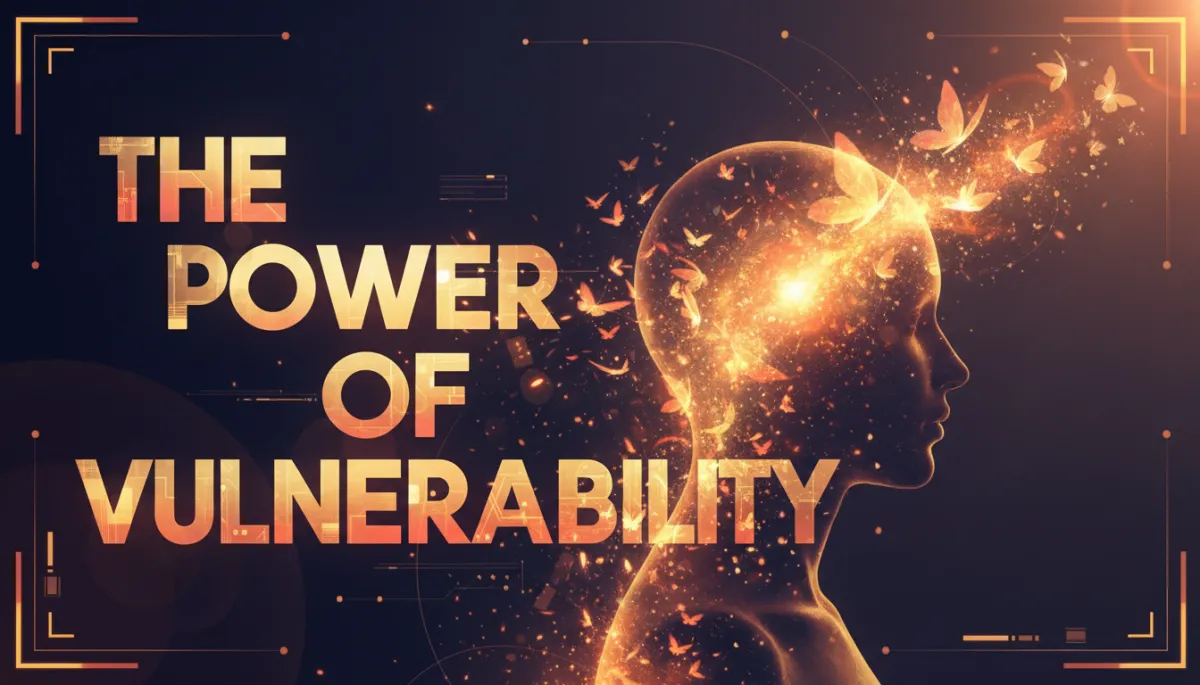
The Power of Vulnerability
Asking for help can become the turning point of a life
The Power of Vulnerability: Letting the Mask Slip
Vulnerability is often misunderstood—especially for men. We equate it with fragility, helplessness, or a lack of control. Many men are conditioned to believe that showing emotion, talking about mental health, or admitting struggle makes them “less of a man.” In reality, vulnerability in men is the courage to be seen as you truly are, without the armor of perfection or the illusion of invincibility. It is the moment you drop your rehearsed lines and say, with honesty, “This is me. This is where I am struggling.”
One of the most striking truths about personal growth for men is that it rarely happens when life is smooth and predictable. Growth takes root in the cracks—those seasons when your usual ways of coping stop working, when you are brought to your knees by loss, burnout, heartbreak, addiction, or sheer exhaustion. In those moments, the power of vulnerability is not theoretical. It is life-saving men’s mental health work.
“Best men are those who've been broken by life and have pulled through, have come out the other end.”
This quote captures a profound transformative realization: greatness is not found in those who never fall, but in those who fall, break, and still choose to rise—often with the help of others. Being “broken by life” is not a moral failure. It is a human inevitability. What defines us, especially as men, is how we respond when the breaking comes.
Dropping the Illusion of Strength and Power
Many of us walk through life carrying an invisible script: “I must be the strong one. I must hold it together. I must not need anyone.” That script can be especially heavy for men, who are often socialized to equate emotional expression with weakness. But this ideal of unshakable strength is just that—an ideal, not a reality. It is an illusion that quietly isolates us from the support we desperately need and fuels men’s mental health struggles like depression, anxiety, and quiet despair.
“They've been forced by circumstances to drop the illusion of their strength and power.”
Life has a way of confronting us with limits we cannot outwork, out-think, or out-muscle. Illness, grief, financial crisis, relationship breakdown, addiction, mental health struggles, or the quiet ache of meaninglessness—these experiences strip away the fantasy that we can do it all alone. It is painful when that illusion shatters, but it is also the beginning of something truer and more humane: the recognition that strength in weakness is real, and that our deepest courage often appears when we dare to say, “I’m not okay.”
💡 Pro Tip: Notice where you feel pressure to “hold it together” as a man—at work, in your relationship, with your family, or among friends. Those areas often point to places where vulnerability could become a doorway to genuine connection and emotional healing. If you’re ready to practice that in real time with other men, you can join our free Boundaries & Brotherhood community and stop trying to carry it all alone.
Hitting Rock Bottom: The Honest Cry for Help
There is a moment, often described as “rock bottom,” when the old ways of coping simply collapse. For many men, it might look like a panic attack in the car, a sleepless night that stretches into weeks, snapping at the people you love, or a quiet realization that the life you’ve built no longer feels like your own. As terrifying as this place is, it can also be the birthplace of a new, more honest self and a turning point in your men’s mental health journey.
“They've hit rock bottom and they've had to reach out and say, ‘I can't cope. I am in infantile position. You know, help me.’”
These words are raw and unpolished, and that is exactly why they are so powerful. To admit “I can't cope” is to step out of the performance of competence and into the truth of your humanity. It is to place yourself, momentarily, in what the quote calls an “infantile position”—not because you are childish, but because you are finally allowing yourself to be held, guided, and supported by others. This is the heart of asking for help as a man.
Far from being a regression, this moment can mark the beginning of profound personal growth. When you ask for help—from a therapist, a mentor, a coach, a friend, a men’s group, or a support community—you are not confessing defeat. You are choosing life. You are choosing to step into a story where you are no longer alone, where healing is possible, and where your pain can be shared rather than silently endured. If you don’t know where to start, you can begin by joining our free Boundaries & Brotherhood community and letting other men walk with you.

Honest conversations in safe spaces often become the turning point in a healing journey.
The Transformative Realization: Strength in Weakness
At the core of this journey is a paradox: what we label as “weakness” often becomes the source of our deepest strength. When you finally admit you are overwhelmed, you open the door to new resources, perspectives, and relationships. When you allow yourself to grieve, you make space for genuine joy. When you confess your fears, you discover that courage is not the absence of fear, but the willingness to move forward in spite of it.
This is the transformative realization at the heart of vulnerability for men: your value does not come from your ability to be invincible. It comes from your capacity to be real, to learn, to adapt, and to love and be loved in the midst of imperfection. In this light, asking for help is not a confession of failure. It is an act of wisdom, emotional maturity, and profound self-respect.
💡 Pro Tip: Reframe “I need help” as “I am choosing growth.” The words you use with yourself shape how you experience your own vulnerability and your mental health as a man. And if you want structured support on that journey, Boundaries & Brotherhood offers coaching, brotherhood, and guided practices designed for men. You can join our free community here and explore what working with us could look like.
A More Glorious Existence: What Happens on the Other Side
When people move through this journey—from illusion to honesty, from isolation to connection—they are often changed in ways that are hard to describe but impossible to miss. Men become softer and stronger at the same time. Their presence carries a grounded calm, a quiet empathy, and a deeper appreciation for the fragile beauty of being human.
“Men become rather glorious when that's happened to them.”
“Glorious” here does not mean flawless, impressive, or larger-than-life. It points to a different kind of radiance—the kind that comes from someone who has faced their own darkness and no longer needs to pretend. They have discovered strength in weakness, and it shows in how they listen, how they lead, how they love, and how they live. They are not threatened by vulnerability in others because they have made peace with it in themselves.
This is the gateway to a more “glorious” form of existence that vulnerability offers. It is a life where:
Relationships deepen because you are no longer hiding behind a mask.
Work becomes more meaningful because you can admit limits and ask for support instead of burning out in silence.
Inner peace grows because your worth is no longer tied to flawless performance, but to honest presence.
Practicing Vulnerability: Small Steps Toward Big Change
Embracing vulnerability does not require a dramatic rock-bottom moment. You can begin, gently, today. Here are a few ways to practice this transformative realization in daily life and support your mental health as a man:
Tell the truth about how you are. When someone asks, “How are you?” experiment with answering a little more honestly: “I’m okay, but it’s been a heavy week.” This simple shift is a powerful act of emotional vulnerability.
Ask for specific help. Instead of silently struggling, try: “Could you listen while I talk this through?” or “Can you help me think about my next step?” Specific asking for help turns vague overwhelm into clear support. And if you want a place where those conversations are normal, you can join our free Boundaries & Brotherhood community and practice this with men who get it.
Seek professional support. Therapy, coaching, or counseling are powerful spaces for personal growth where your vulnerability is not a burden but the starting point of healing. Men’s therapy and men’s groups are designed to normalize men’s mental health conversations. Boundaries & Brotherhood offers coaching and community for men who want structure, accountability, and brotherhood on this path.
Offer vulnerability back. When others share their struggles, resist the urge to “fix” them. Instead, meet them with the same understanding you are learning to extend to yourself. This builds emotionally safe relationships where both men and women can be real.
📌 Key Takeaway: You don’t have to figure this out alone. Inside the free Boundaries & Brotherhood community at go.boundariesandbrotherhood.com, you’ll find:
Real conversations with real men who are done pretending and ready to grow.
Guided tools and practices to help you set boundaries, regulate emotions, and communicate clearly.
Live calls and support so you’re not trying to navigate burnout, anxiety, or relationship strain on your own.
Access to next-step programs and coaching if you decide you want deeper, more personalized work with us.
Choosing a Glorious Kind of Strength
The journey from self-sufficiency to shared humanity is not easy. It asks you to confront long-held beliefs about what it means to be strong, to succeed, or to be “enough” as a man. Yet on the other side of that discomfort lies a richer, more compassionate way of living—a way of being that truly deserves the word “glorious.”
The next time you feel the urge to tighten your jaw, swallow your feelings, and push through alone, pause. Remember the wisdom in those featured quotes. Remember that the “best” among us are not those who have never been broken, but those who have been broken and have pulled through—not by doubling down on isolation, but by reaching out, saying “I can’t cope,” and discovering that asking for help is not the end of their strength, but the beginning of a deeper, truer, and more radiant one.
That is the power of vulnerability: it takes what we fear will destroy us and transforms it into the very path that makes us whole.
If you’re a man going through something right now—whether it’s burnout, quiet anxiety, relationship strain, or a full-on rock-bottom moment—you do not have to carry it alone. Your next step toward a more glorious life might be as simple as starting a real conversation. Reach out to someone you trust, connect with a men’s group, or schedule time with a therapist or coach who understands men’s mental health and vulnerability. Your willingness to ask for help could be the beginning of the strongest, most grounded version of you yet. And if you want a place to start right now, you can join our free Boundaries & Brotherhood community and explore what’s possible when you stop walking this road alone.