

Master Success: Model Excellence & Achieve Goals
Personal Growth, Science Of Success, Self-mastery Techniques, Achievement Skills
The Science Of Success: How To Model Excellence And Master Achievement
To achieve an extraordinary quality of life, you don’t need luck, a perfect background, or a rare talent. You need a clear vision and the willingness to master a few powerful self-mastery techniques that turn that vision into reality. Two of the most important are the Science Of Success and the art of Modeling Success—together, they form a practical roadmap from where you are to where you want to be.
The Science Of Success: Turning Vision Into Reality
When people hear “success,” they often think of chance—being in the right place at the right time. The Science Of Success rejects that idea. It treats achievement as a process governed by patterns, cause and effect, and repeatable strategies. In other words, success is not magic; it is a set of achievement skills that can be learned, practiced, and refined.
At its core, this science is about transforming visions into reality. It starts with a compelling, specific vision—what you truly want in your health, relationships, finances, or career. But vision alone is not enough. You must translate that vision into measurable outcomes, clear milestones, and daily actions that move you forward consistently, even when motivation dips or obstacles appear.
Confronting Limiting Stories And Internal Narratives
The biggest barrier between your current reality and your desired future is rarely external—it’s the story you tell yourself. These limiting stories and internal narratives sound like:
“People like me never succeed at this.”
“I’m just not disciplined enough.”
“If I fail, it proves I’m not good enough.”
The science of achievement requires you to notice these patterns and deliberately rewrite them. Instead of, “I’m not disciplined,” you adopt, “Discipline is a skill, and I am training it every day.” This is not empty positive thinking; it is a practical self-mastery technique. Your internal language shapes what you attempt, how you persist, and how you interpret setbacks. Changing the narrative changes the actions you are willing to take—and therefore, the results you can create.
💡 Pro Tip: When you catch a limiting story, add the phrase “for now.” “I’m not good at this—for now” keeps you honest about today while leaving the door open for growth.
Modeling Success: Learning From Those Who’ve Already Done It
If the Science Of Success explains that achievement is learnable, the art of Modeling Success explains how to learn it quickly. Instead of guessing your way forward, you study and mimic proven strategies of role models who have already achieved the results you want. You treat their lives as data, not as distant inspiration.
Effective modeling goes deeper than copying surface habits. It means asking:
What beliefs drive their decisions?
How do they respond when things go wrong?
Which daily patterns—morning routines, planning habits, learning rituals—support their results?
Then you experiment with those patterns in your own life, adapting them to your personality and circumstances. Over time, you build a customized system of achievement skills informed by real-world evidence, not trial and error alone.
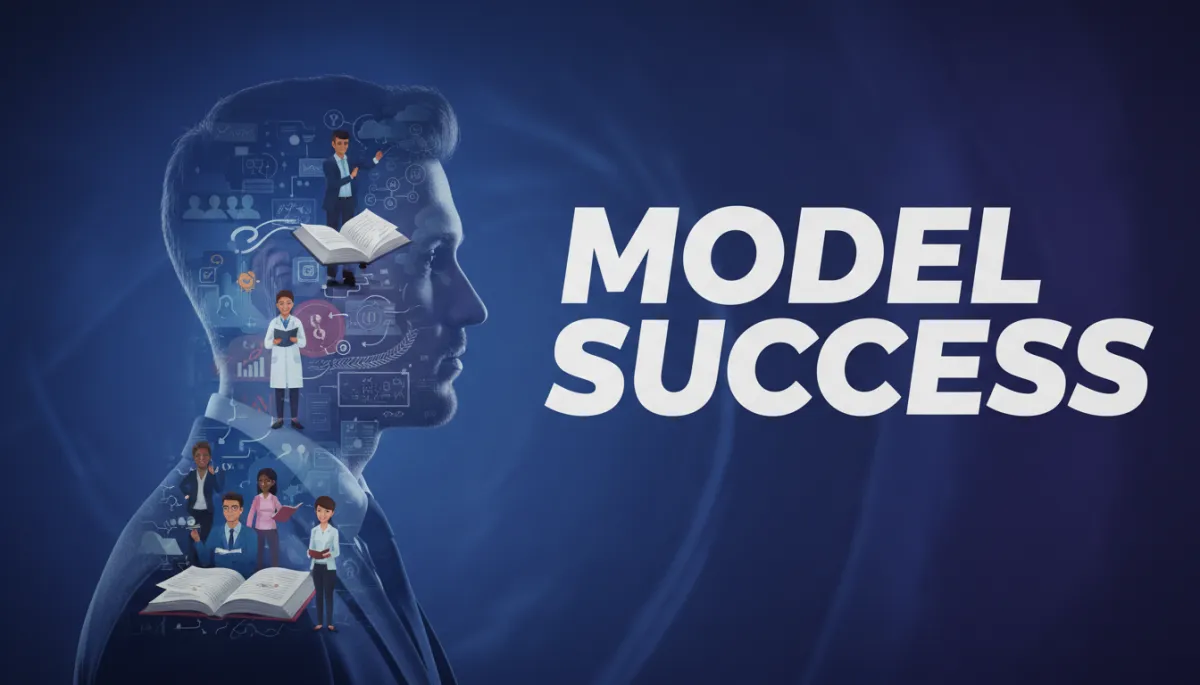
Modeling success turns inspiring stories into practical, repeatable strategies you can apply.
Self-Mastery Techniques: Choosing Patterns On Purpose
Both the Science Of Success and Modeling Success come to life through daily self-mastery techniques. These techniques are less about willpower and more about choosing patterns that make the right actions easier and the wrong ones harder. Examples include:
Setting a fixed time each day to review your vision and top priorities.
Using simple checklists or trackers to reinforce new habits.
Creating “if–then” rules: “If it’s 7 a.m., then I train,” or “If I feel stuck, then I ask, ‘What’s one small next step?’”
Over time, these choices hardwire supportive patterns into your identity. You stop negotiating with yourself about whether to act and instead follow a structure you designed in advance. This is self-mastery in practice: you become the architect of your own behavior.
Achievement As A Skill-Based Result Of Focused Vision
Ultimately, achievement is a skill-based result, not a random reward. It emerges when you consistently choose patterns that align with your goals and stay relentlessly focused on your vision, even when progress feels slow. The people you admire are not simply “gifted”; they have practiced the Science Of Success, modeled effective strategies, and refined their self-mastery techniques over years.
You can do the same. Start by clarifying a vision that excites you. Notice and challenge the limiting stories that keep you small. Seek out role models and study the specific ways they think and act. Then, design simple, repeatable patterns that keep you moving in the direction of that vision every single day.
When you approach your life this way, success stops being a mystery. It becomes a process—one you can understand, practice, and ultimately master. Your extraordinary quality of life is not a matter of luck; it is the natural outcome of applying the Science Of Success and Modeling Success with intention and persistence.