
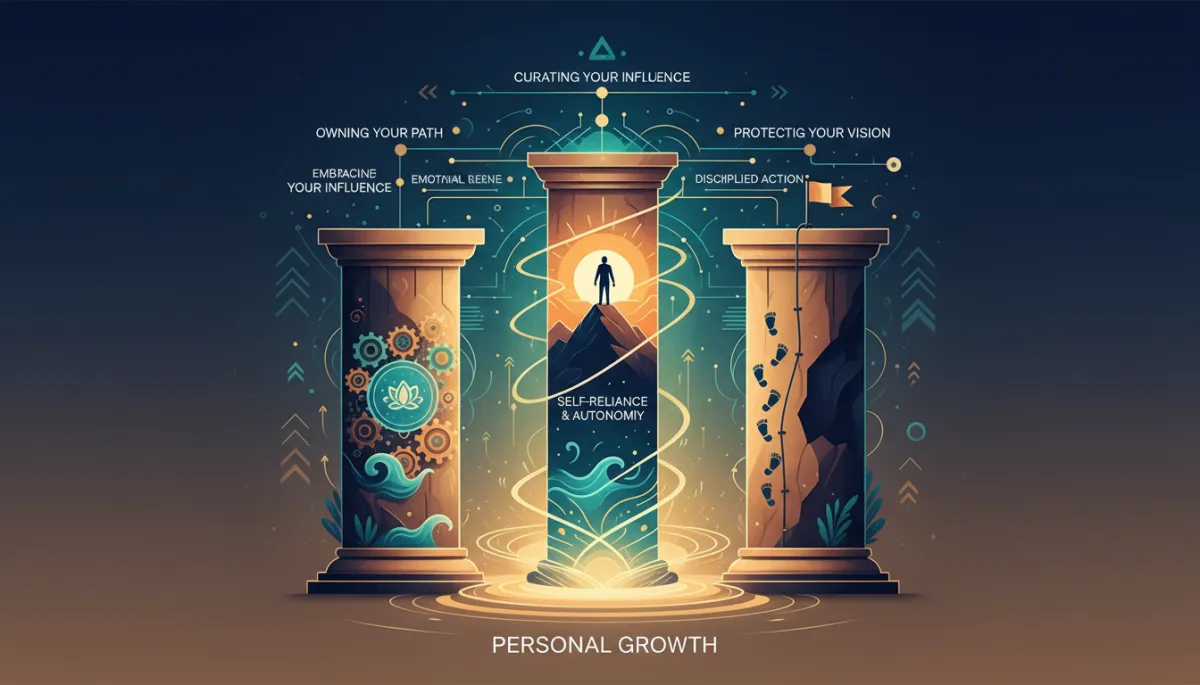
The Three Pillars of Personal Growth
Self-reliance, Emotional Intelligence, Personal Growth, Disciplined Action
The Three Pillars of Personal Growth: Self-Reliance, Emotional Intelligence, and Disciplined Action
Sustainable personal growth is not an accident; it is the result of living intentionally around a few core principles. When you commit to self-reliance and autonomy, cultivate emotional intelligence and a resilient mindset, and practice disciplined action every day, you create a life that is directed from within rather than dictated by circumstance or comparison.
Pillar One: Self-Reliance and Autonomy – Owning Your Path
Self-reliance is not about doing everything alone; it is about trusting yourself to lead your own life. Autonomy means you are the primary decision-maker, the author of your story. Instead of waiting for permission, applause, or perfect conditions, you choose to move forward with what you have, where you are, right now.
Owning your path begins with the importance of prioritizing personal growth. When growth becomes a non‑negotiable priority, you stop outsourcing your progress to luck, other people, or external validation. You invest in learning, reflection, and skill-building the way others invest in entertainment. Your calendar, budget, and daily choices start to reflect a quiet but firm message: “My development matters.”
To live with autonomy, you must also curate your influence. The voices you allow into your life shape your beliefs, standards, and expectations of yourself. Self-reliant people are intentional about:
The people they spend time with – seeking those who challenge, not just comfort, them.
The content they consume – choosing books, podcasts, and media that expand their thinking instead of numbing it.
The environments they enter – preferring spaces that support focus, creativity, and integrity.
Curating your influence is a quiet act of self-protection. You are not being closed-minded; you are protecting your vision. When you have a clear sense of who you want to become, you cannot afford to let every opinion, trend, or criticism dictate your direction. Self-reliance means listening thoughtfully but deciding independently.
💡 Pro Tip: Ask yourself weekly, “Who and what is shaping my thinking right now—and is that aligned with who I want to be?”
Pillar Two: Emotional Intelligence and Mindset – Mastering the Inner World
Emotional Intelligence is the ability to understand, manage, and express your emotions in a way that serves you and the people around you. Combined with a growth-oriented mindset, it becomes a powerful engine for personal growth. Instead of being pushed around by moods, fears, and impulses, you learn to respond with clarity and intention.
A key part of emotional intelligence is embracing the present. Many people live either in regret about the past or anxiety about the future. Growth happens in the only place you can actually act: this moment. When you bring your attention fully to what is in front of you—this task, this conversation, this decision—you stop leaking energy into what you cannot control and start building momentum where you can.
Another expression of emotional intelligence is maintaining composure. Composure is not about suppressing emotion; it is about not letting temporary feelings dictate permanent decisions. When criticism, setbacks, or unexpected changes appear, your first job is not to react, but to notice. You pause, breathe, and ask, “What is really happening here? What is within my control? What response aligns with my values and long‑term goals?”

A brief pause to reflect can turn emotional reactions into thoughtful responses.
Emotional intelligence also helps you eliminate comparisons. Comparison is one of the fastest ways to drain your confidence and blur your vision. In a world of constant updates and curated highlights, it is easy to measure your worth against someone else’s timeline, achievements, or appearance. But their path is not your path. Their pace is not your pace. Their definition of success may not match what truly matters to you.
Instead of comparing outward, emotionally intelligent people choose to focus inward. They ask:
Am I growing compared to who I was last month or last year?
Are my choices aligned with my values, not someone else’s expectations?
What lesson is this challenge trying to teach me right now?
By shifting attention from comparison to self‑awareness, you reclaim energy that would have been wasted on envy or insecurity. That energy can now be invested into skill-building, relationships, health, and meaningful work—the very areas that expand your capacity and deepen your fulfillment.
📌 Key Takeaway: Emotional intelligence is not about being emotionless; it is about being emotionally responsible—choosing responses that align with your long‑term vision, not your short‑term impulses.
Pillar Three: Disciplined Action – Turning Intentions into Reality
You can understand self-reliance and emotional intelligence perfectly and still stay stuck if you do not move. That is where disciplined action enters. Discipline is not punishment; it is the structure that allows your potential to become visible. It is the bridge between who you are and who you want to be.
Disciplined action is less about dramatic gestures and more about consistent, repeatable behaviors. It looks like:
Showing up for your morning routine even when motivation is low.
Setting clear priorities for the day and honoring them.
Saying “no” to distractions that dilute your focus and “yes” to the work that moves you forward.
Discipline is also how you continue protecting your vision in the face of doubt and delay. When results are slow, it is easy to question whether your efforts are worth it. But disciplined action is rooted in commitment, not convenience. You keep acting in alignment with your goals even when there is no immediate payoff because you understand the reward of persistence.
Persistence turns small, almost invisible steps into visible transformation. The first workout does not change your body; the first page does not make a book; the first difficult conversation does not heal a relationship. But repeated over weeks and months, these actions compound. Disciplined action is how you earn the right to look back and say, “I built this. I became this.”
⚙️ Practice: Choose one area of your life—health, career, learning, or relationships—and define a single daily action you will take for the next 30 days, no matter how small. Track it. Honor it. Let the habit teach you who you are becoming.
Integrating the Three Pillars into Your Everyday Life
These three pillars—self-reliance and autonomy, emotional intelligence and mindset, and disciplined action—are not separate projects. They reinforce one another. When you own your path, you are more willing to do the uncomfortable emotional work. When you manage your inner world, you make better decisions about where to direct your energy. When you act with discipline, you build evidence that you can trust yourself, which deepens your self-reliance and strengthens your mindset.
A simple way to begin integrating all three is to create a daily check‑in around three questions:
Self-reliance: “Where did I take responsibility for my life today, and where did I give my power away?”
Emotional intelligence: “How did I respond to challenges, and what did I learn about my reactions?”
Disciplined action: “What did I do today that moved me even one step closer to my vision?”
Over time, these daily reflections help you stay grounded in the present, reduce unhelpful comparisons, and keep your focus inward on what you can actually influence. You become less reactive and more intentional. You stop chasing every new idea and instead build depth in the commitments that matter most to you.
The Long-Term Reward of Walking Your Own Path
The journey of personal growth is not a straight line, and it is not always glamorous. There will be seasons where progress feels invisible, where old habits pull hard, and where other people’s lives appear easier or more impressive. In those moments, remember that your job is not to live their story; it is to fully inhabit your own.
When you commit to self-reliance, you stop waiting to be chosen and choose yourself. When you cultivate emotional intelligence, you stop fighting your emotions and start learning from them. When you practice disciplined action, you stop wishing and start building. The reward of persistence is not only in the external results you achieve, but in the person you become along the way—steadier, clearer, more grounded, and more capable of creating a life that feels true to you.
Prioritizing personal growth, owning your path, curating your influence, embracing the present, maintaining composure, eliminating comparisons, focusing inward, protecting your vision, and acting with discipline are not one-time decisions. They are daily choices. And each day you choose them, even imperfectly, you place another brick in the foundation of a life built from the inside out.
✅ Call to Value: Your life will not transform because you read about these pillars—it will transform because you live them. Starting today, choose one small way to be more self-reliant, one moment to practice emotional intelligence, and one disciplined action you will take no matter how you feel. The value is not in perfection, but in your willingness to keep showing up for yourself, day after day.