
When Every Hard Conversation Feels Like an Attack
communication, accountability, emotional maturity, men's growth
When Every Hard Conversation Feels Like an Attack
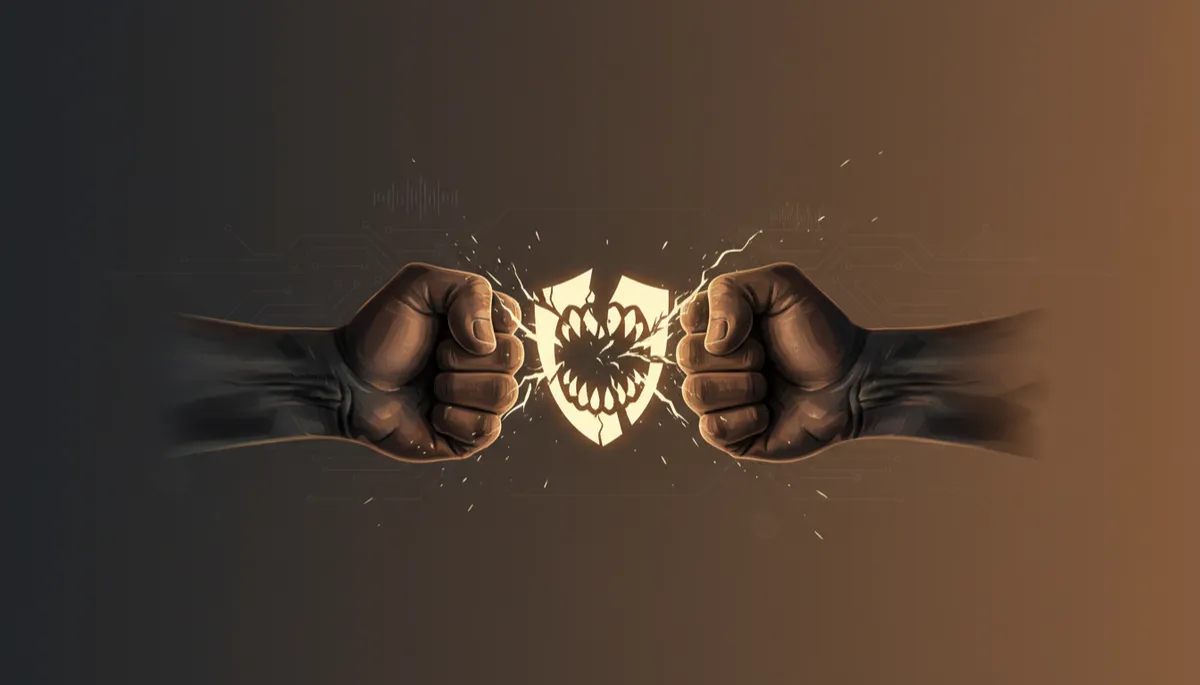
If you’re honest, brother, how many “conversations” in your life are really just low-key fights? Your woman brings something up, your boss gives feedback, a friend says they’re hurt — and your chest tightens, jaw locks, and it feels like they just pulled a weapon on you. One sentence in and you’re already defending, explaining, or shutting down. Every hard conversation feels like an attack, and somehow you keep ending up as the guy who’s “misunderstood,” “disrespected,” or “always getting blamed.”
Let’s cut through the bullshit: a lot of men were never taught real communication. We learned how to argue, how to win, how to shut people out, or how to keep the peace by going numb. But we didn’t learn how to stand in the fire of a difficult conversation without turning it into a war. And without real accountability, it’s easy to convince ourselves that everyone else is the problem — women are too emotional, bosses are unfair, friends are too sensitive. That story might protect your ego, but it’s killing your relationships and stunting your men's growth.
"If every conversation feels like an attack and everybody else is wrong, the problem isn't everybody else."
— Gordon Wat
When Poor Communication Turns Everything Into a Fight
Most of us think we’re “good communicators” because we can talk a lot or argue our point. That’s not communication; that’s performance. Real communication is about connection, clarity, and responsibility for your impact — not just your intent. When that’s missing, every difficult topic feels like an ambush, and you respond like you’re under attack even when you’re not.
- Your partner says, “I felt alone last night,” and you hear, “You’re a failure.”
- Your boss says, “This needs improvement,” and you hear, “You’re incompetent.”
- Your friend says, “That joke stung,” and you hear, “You’re a bad guy.”
The words coming at you are about a situation, a behavior, a moment. But the story in your head is about your worth. That’s where emotional maturity comes in. Without it, you collapse feedback into identity. You don’t hear, “This action had an impact.” You hear, “You are the problem.” And once you believe you’re under attack, your nervous system does what it’s designed to do: fight, flee, or freeze. You argue, you shut down, or you disappear.
How Lack of Accountability Makes Everyone Else Wrong
Here’s the harsh truth: when you refuse to look at your part, you have to make everyone else the villain. That’s the only way your ego can stay clean. If you’re never willing to say, “Yeah, I did that,” then the only narrative left is, “They’re overreacting,” “They’re crazy,” or “They’re always on my case.” That’s not sovereignty. That’s avoidance dressed up as strength.
Accountability doesn’t mean you’re always wrong. It means you’re always willing to check. It means you can ask, “What’s my part here?” before you start listing everyone else’s. A man who refuses accountability becomes emotionally fragile, even if he looks tough on the outside. You can bench heavy, run a business, and still be emotionally weak if you can’t own your impact on the people closest to you.
Sovereignty Without Hiding Behind Defensiveness
Men’s sovereignty gets twisted a lot. Some guys hear “sovereign” and think it means, “No one can tell me shit.” That’s not sovereignty; that’s isolation. Real sovereignty is the ability to stand in yourself — values, boundaries, truth — while staying open to reality, including the parts that are uncomfortable. You can be unshakable without being unreachable.
Defensiveness is what happens when your sense of self is so fragile that any feedback feels like a threat. Sovereignty is what happens when you know who you are deeply enough that you can hear hard truths without collapsing or attacking. You don’t have to agree with every criticism. You do have to be willing to listen, sort, and respond with clarity instead of reactivity. That’s men's growth in action — not theory.
Practical Ways to Listen Like a Man, Not a Boy
You don’t rise into emotional maturity by reading quotes on the internet. You rise by doing reps in real conversations. Here are concrete ways to shift how you show up when things get tense:
- Pause your mouth, notice your body. When a hard topic comes up, your body will react before your brain does. Heat in the chest, tight throat, racing thoughts. Instead of firing back, take one slow breath. Feel your feet on the ground. This is you choosing response over reflex. Say out loud, “Give me a second to take this in.” That one line buys you space.
- Reflect what you heard before you defend anything. Most fights come from people feeling unheard. Before explaining yourself, say, “What I’m hearing you say is…” and repeat the core of their message. Then ask, “Did I get that right?” This doesn’t mean you agree. It means you’re actually in the same conversation, not arguing with the version in your head. That’s real communication, not just noise.
- Separate intent from impact. You might not have meant to hurt or disrespect anyone. Fine. But impact is real whether you meant it or not. Say, “My intent wasn’t to hurt you, but I can see that it did. I own that.” That’s a grown man talking. You keep your truth and still take responsibility for the effect you had.
- Own your part clearly and specifically. Drop the vague “Sorry you feel that way.” That’s cowardly. Try, “I interrupted you three times; that was disrespectful,” or “I raised my voice and that wasn’t okay.” Specific ownership builds trust. People relax when they see you’re willing to look at yourself without being forced.
- State your boundary without aggression. Sovereignty also means you don’t let every accusation land as truth. If someone crosses a line, say, “I’m open to hearing feedback, but I won’t stay in this conversation if I’m being insulted or yelled at. If we can keep it respectful, I’m here.” Calm, clear, and grounded. No threat, no begging. Just your standard.
Respond With Clarity, Not Chaos
Once you’ve listened, reflected, and owned your part, then you respond. Not from the 10-year-old boy inside you trying not to get in trouble, but from the man you’re choosing to be. A clear response sounds like this:
- “I see how what I did impacted you. Here’s what I’m willing to do differently.”
- “I hear your perspective, and I don’t fully agree. Here’s my view, and here’s where I’m still a no.”
- “This conversation matters to me. Let’s take a break and come back when we’re both regulated.”
Clarity doesn’t always mean harmony. Sometimes it means a clean disagreement instead of a dirty war. But when you communicate like this, you stop living in constant emotional crossfire. You start building relationships where hard conversations are pathways, not landmines.
Your Next Move
Brother, if every hard conversation feels like an attack, that’s not just “how you are.” It’s a pattern — and patterns can be changed. It takes courage, practice, and guidance. But this is the work that separates men who keep burning their lives down from men who can lead, love, and stand tall under pressure.
If you’re ready to see where your communication, accountability, and emotional maturity are actually at — not where you pretend they are — start with a straight-up look in the mirror. I built a free assessment to help you do exactly that. Go to assessment.boundariesandbrotherhood.com and get honest data on your patterns in conflict, boundaries, and ownership.
And if you’re done trying to white-knuckle this alone, and you want to train these skills with other serious men, step into the work with me at go.boundariesandbrotherhood.com. This is where we turn theory into practice, and practice into a new baseline for how you show up as a man.
You don’t have to keep living like every hard conversation is an attack. You can become the man who can hear the truth, own his impact, speak with clarity, and still stand firmly in his sovereignty. That version of you is possible. The question is whether you’re willing to do the work to meet him.
— Gordon Wat